Regulatory Compliance
Statutory Compliance in Singapore
 While Singapore may have the reputation of being one of the easiest countries to set-up and run a business in, it is also true that its orderly and transparent legal system does require strict regulatory compliance by companies incorporated in Singapore. Successful Singaporean regulatory compliance is based on the statutory obligations as set out in the Companies Act. These statutory obligations make it easier for investors, shareholders and other companies to gain some understanding of a company, their prudential rigour, and their adherence to GRC compliance before they decide to invest or work together.
Naturally, to maintain its business-friendly climate, most of these statutory obligations are not tediously onerous and are clearly set out in brochures sent out by the Accounting and Corporate Regulatory Authority (“ACRA”), Inland Revenue Authority of Singapore (“IRAS”) or any other relevant government bodies.
There are a few basic regulatory compliance matters that should be adhered to by all companies acting in Singapore. These Singapore compliance requirements can generally be attended to by a professional corporate services firm. While most of these procedures are executed post-incorporation, some of these statutory requirements do have stipulated timelines within which the company needs to comply. Hence, it would be prudent for companies to have their governance, risk management and compliance matters in mind even before the incorporation process, so that everything can be executed in a timely manner.
Financial Year End
 All companies should determine a financial year end. For companies that are owned by multi-national corporations, foreign corporations or other local companies, they would typically prefer to follow the same financial year end. This is so that the group consolidated financial accounts can be prepared more easily as the parent company and its subsidiaries’ accounts are finalised in the same period.
One key consideration for newly incorporated companies is to set the company’s financial year end within 365 days to enjoy tax benefits, as IRAS extends full tax exemption to newly incorporated companies that meet the qualifying conditions on the first S$100,000 of chargeable income for each of its first three consecutive years of assessment. Do note however, that the said tax exemption does not apply to property and investment holding companies.
Appointment of Auditors
 All companies should appoint an auditor within three months from the date of incorporation, unless it fulfills all of the following requirements:
- All shareholders are individuals and not corporations;
- Total number of individual shareholders is less than twenty; and
- Annual turnover of the company is less than S$5 million.
Similar to the financial year end, multi-national corporations, foreign entities or parent companies may wish to consider engaging the same audit firm to carry out the audit.
Disclosure of the Company’s Registration Number
 A company’s registration number, otherwise known as the Unique Entity Number (“UEN”) is issued to a company upon incorporation, by the ACRA. A Certificate of Incorporation can be purchased from the ACRA to confirm that the company has been incorporated in Singapore and has been issued the said registration number.
It is essential that the company discloses its registration number on all official correspondences with government authorities, business letters, audited accounts, invoices; and any other official notices sent out by the company. Government agencies in particular, will often refer to a company by its registration number. For example, IRAS uses the company’s registration number as its tax reference number.
Notification of Changes
 Given that ACRA is the nation’s Company Registrar, it is essential that ACRA be notified on a timely basis of any changes within the company, such as any transfer of shares, increase or decrease in share capital, or the nomination or resignation of the officers of the company, which would include directors and the company secretary.
Do consult a professional corporate service firm before executing any changes, as a professional would be able to advise you of the stipulated timeline as set out by the Companies Act. For certain changes, such as allotment of shares, companies are required to lodge the change with ACRA within 14 days. In addition, the company should also prepare and execute the necessary documentation to maintain proper records in its minute book. In the instance where shares are transferred, both the ACRA and IRAS need to be notified.
Tax and Accounting Requirements
IRAS does require companies to submit certain documents on an annual basis, which are set out in the table below:
| Estimated Chargeable Income | An estimate of the company’s chargeable income for the Year of Assessment (YA). This should be submitted within 3 months after the financial year end |
| Accounting Records | Comprising Profit and Loss Account, Balance Sheet, Cash Flow Statement and Equity Statement |
| Tax Returns | Audited or unaudited accounts accompanied by a tax computation form (known as the Form C or Form C-S) |
| Financial Report | Financial statements of the company |
Depending on your company’s finances, number of accounting transaction, sales turnover and shareholders, the information to be filled in the documents may differ. For companies that are new to the submission process with IRAS, it may be prudent to engage an experienced professional tax or accounting consultant to advise and assist.
Business Licenses and Permits
This requirement is specific to companies that are engaged in businesses that require licenses before they can commence business operations. Examples of business activities that would require special licenses include, but are not limited to:

- Retail stores
- Construction companies
- Companies dealing with import and export
- Hotels and Spas
- Medical clinics or associated services
- Employment agency
- Travel agency
- Companies offering financial advisory services or any other associated services
- Real estate agency
- Private education services
For more information, one would need to find out more about which statutory board governs the specific industry and its activities. As the Singapore government as a whole is generally very advanced in the use of technology, most of these applications can be submitted electronically via their websites or portals.
Registered Office Address
 All companies should have a local registered office address, which cannot be a P.O. Box. The office should be open to the public for a minimum of three hours per day during normal business hours on weekdays. In the event that a company has, for special reasons, different registered office hours from the norm (9.00 a.m. to 5.00 p.m. on weekdays), the company will have to notify ACRA of the different registered office hours.
Holding of Annual General Meeting and Filing of Annual Returns
 Every company should hold an Annual General Meeting (“AGM”) either once every calendar year, or 15 months from the date of its last AGM, whichever is earliest. However, companies that have been newly incorporated are allowed to hold their first AGM within 18 months from the date of incorporation.
Once an AGM is held, the Annual Return of the company should be filed with the ACRA within one month from the date of AGM. The Annual Return is typically submitted electronically by the company’s company secretary or corporate secretarial service provider and the following information of the company will be verified during the process:
- Company’s full name and registration number;
- Registered address
- Principal activities
- Company type (i.e. private company, public company, small exempt private company)
- Summary of issued and paid-up share capital
- Registered charges
- Information of Directors, Company Secretary, Auditors and Shareholders
- Date of AGM and the financial period that the audited accounts have been made up to
- Financial statements, if applicable
Depending on the company type, different requirements would apply when it comes to filing the Annual Returns and preparation of the audited accounts. A quick snapshot of the requirements for the three most common company types is depicted below:
| Public company limited by shares | Private company limited by shares | Small or Dormant Exempt private company | |
|---|---|---|---|
| Unaudited accounts | x | x | |
| Audited accounts | x | ||
| Partial XBRL | x | x | |
| Full XBRL | x |
Goods and Services Tax Registration
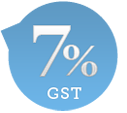 Known as VAT in some other countries, GST is the tax on the supply of goods and services in Singapore and applies to the import of goods into Singapore as well. However, only companies that fulfil any one the following criteria are required to be GST-registered:
- Annual taxable revenue exceeds S$1 million;
- Company manufactures taxable supplies and its annual taxable revenue is expected to exceed S$1 million.
A company can also opt to be GST-registered voluntarily and will have to comply with all obligations that apply to GST-registered companies. Even if its turnover is less than S$1 million, a company may still opt to register for GST voluntarily.
Companies that are GST-registered will have to comply with the following:
- E-filing of accurate GST returns in a timely manner
- Payment of tax in a timely manner
- Retain business and accounting records for five years
- Include GST in any price displays, advertisements, quotations, publications and invoices
- Be co-operative with any GST audits
- Accounting for GST on Business Assets at point of De-registration
To understand more about GST registration, you may wish to consult a professional tax specialist.
CPF registration or SDF registration
 The Central Provident Fund (“CPF”) is a compulsory pension fund scheme. The employer and employee will contribute a percentage of their monthly salary to the fund. This is mandatory for all employers who have employees who are Singapore Citizens or Singapore Permanent Residents earning more than $50.00 a month.
For work pass holders and employment pass holders, their employer is required to contribute a fee to the Skills Development Fund (“SDF”). This is payable up to the first S$4,500 of the employee’s gross monthly income.
Stay on top of regulatory compliance requirements
We are experts when it comes to Singapore's company laws and regulations. Thousands of companies rely on us to fulfil their regulatory compliance requirements.