Inside the Content
What comes to mind when you hear the term “tax haven”?
Often, the first things that come to mind are shady or questionable jurisdictions that impose very low or zero tax rates either on income or other significant revenue-generating components of the economy.
And it’s not surprising, especially when you have scandals like the Panama Papers and Luxembourg Leaks that exposed tax havens used for criminal purposes.
There is no formal definition of the term anywhere, even though international organisations such as the OECD use certain markers for non-transparent or non-cooperative countries related to tax matters and the facilitation of tax evasion.
What is a Tax Haven?
A tax haven typically has a tax structure designed to attract companies and individuals from higher-tax jurisdictions to avoid paying taxes in their home countries.
Another feature of such tax havens is that the individual’s or the company’s substantive local presence in that jurisdiction is not required.
Is Singapore a Tax Haven?
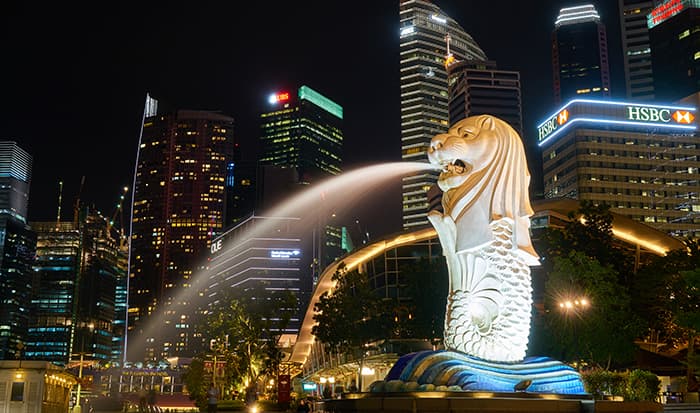
Some have the mistaken impression that Singapore has replaced Switzerland as a tax haven, which is wholly untrue.
The Singapore banking and finance industry is highly-developed and facilitates a large amount of wealth management activities. It also has high standards of regulation and compliance practiced at an internationally-lauded level.
Related Read: What is Tax Evasion, and how do I avoid committing it in Singapore? »
For example, there are some who opine that Singapore is on the “list” of countries like the U.S. because there is a great deal of discussion and engagement on these matters between the governments of the two countries.
The reality is that there are many real American investors, entrepreneurs and businesses that come to Singapore to do business, form a Singapore company, or generate large profits.
Therefore, it makes sense that the IRS attempts to engage the Singapore government in their FATCA activities.
The fact is, however, that the Foreign Account Tax Compliance Act (FATCA) is a US federal tax policy that applies across the board and to all countries where there are Americans.
It was signed into law by Barack Obama to increase the efficiency of the US government in improving tax compliance of Americans with regards to their foreign financial assets internationally.
Besides, the Singapore tax system aims to attract substantive economic activities by keeping the tax burden on enterprises and individuals as low as possible. Businesses are taxed at 17%, and the individual income tax rate is progressively taxed at up to 20%.
Such a tax system is designed to boost a diversified, knowledge-based economy that spans a wide range of economic sectors. It is not a means for wealthy individuals to park their money inactively in Singapore to avoid taxes back in their home countries.
Singapore’s Vigilant Stance on Taxation
Furthermore, Singapore does not allow the abuse of its financial system to facilitate tax evasion and/or other crimes, such as money laundering or the financing of terrorism.
As an international financial centre, Singapore has an internationally acknowledged reputation for being highly vigilant against illicit funds that could threaten its integrity.
Related Read: Effective Tax Planning for Singapore Companies »
It cooperates extensively with international partners and authorities such as Interpol to deter and prevent such criminal abuse.
Singapore also endorses and implements the internationally agreed Standard for Exchange of Information (the EOI Standard) for tax purposes in its tax treaties. The level of tax cooperation that Singapore renders to its tax treaty partners is fully in line with global standards.
Additionally, Singapore’s financial sector is characterised by high standards of financial regulation and supervision by the authorities, and it is not through low taxes per se. Singapore’s banking and financial system is open and transparent, and rules are rigorously enforced.
Investors choose Singapore as the place in which to manage their wealth because of the country’s economic and political stability, sound regulations, respect for the rule of law, and the availability of fund management expertise.
Singapore privacy laws provide bank customers the right to the confidentiality of information. However, banking confidentiality has never prevented the Singapore authorities from providing information to assist domestic or foreign authorities in bonafide investigations of potential criminal activities.
Countries That Are Actual Tax Havens
According to CNBC’s “Countries with Zero Income Taxes”, the following are the top countries that are actual tax havens in terms of them not having any income taxes.
United Arab Emirates
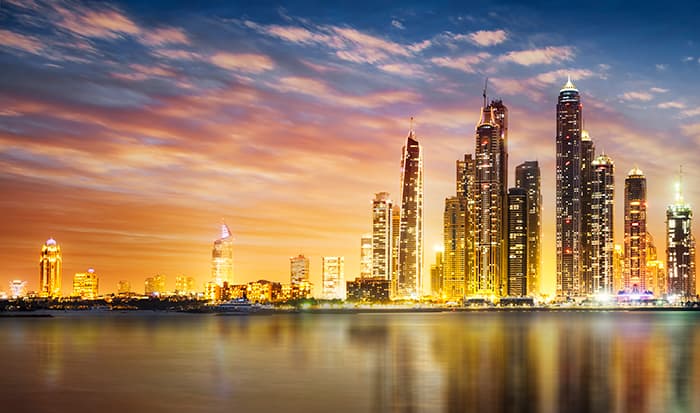
The UAE has the fourth-largest economy in the Middle East and its gross domestic product (GDP) is valued at US$498 billion as of 2023.
The country is the 5th-biggest exporter of crude oil globally and is therefore dependent on oil companies that pay up to 55% in corporate tax.
Expatriates who work in the UAE do not have to pay for any social security contributions, but citizens make monthly contributions of 5% of their total earnings for such purposes and their employers, 12.5% of that citizen employee’s base salary.
Other indirect taxes include housing fees, road tolls, and municipal taxes. A 50% tax on alcohol is also charged, and if a person with a liquor license buys alcohol to drink at home, an additional 30% tax is charged.
Qatar
Qatar is one of the world’s richest countries, with a GDP per capita projected to reach 66,334.00 USD by the conclusion of 2023.
As a gas-rich nation, Qatar relies on its natural gas reserves — which are the world’s 3rd-largest — for revenue and has invested heavily in infrastructure to liquefy and export the commodity.
As such, it levies no taxes on personal incomes, dividends, royalties, profits, capital gains, and property. However, citizens will have to pay 5% of their income for social security benefits, while employers contribute 10%.
Presently, there is no VAT or sales tax charged on operations, but it may be implemented in the future, anticipated at a rate of 5%. Other indirect taxes include a 5% charge on imported goods.
Oman
Oman, like its neighboring Middle Eastern countries, derives the majority of its revenue from crude oil.
Projected for 2023 at around OMR 6.7 billion, accounting for 67% of total receipts, Oman’s revenue projections are dependent on an assumed oil price of $55 per barrel.
Omani national employees are subject to a 17.5% social security contribution, whereas expatriate employees are not. The employee is responsible for a 7% salary contribution, while the employer covers the remaining 10.5%. Additionally, the employer must contribute 1% of the employee’s salary for work-related injury insurance. This results in a total monthly obligation for the employer of 11.5% towards social security and insurance contributions.
However, unemployment (of citizens) is high and income disparity is a much-debated issue.
Kuwait
As the world’s 8th-largest oil exporter, Kuwait’s oil revenues for the fiscal year 2023 grew to $87 billion, accounting for around 95% of Kuwait’s exports.
While there is no income tax in the country, Kuwaiti nationals must contribute 8% of their salary for social security benefits; their employers, an 11.5% contribution.
However, Kuwait is constantly exposed to political turmoil, ushering in four new parliaments in 6 years.
For various reasons, the IMF has recommended that Kuwait introduce a value-added tax and comprehensive income tax system.
Cayman Islands
Well known as an offshore financial center, the Cayman Islands are a big draw for the wealthy with its zero personal income and capital gains taxes. It also has no mandatory social security contributions.
Employers, however, are required to provide a pension plan for all workers, including expatriates. While there is no value added tax or government sales tax, the country does have some indirect taxes such as import duties, which can range up to 27%.
A high standard of living in the Caymans also means high property prices that are among the highest around.
Bahrain
Despite its oil wealth, Bahrain has been knee-deep in debt for a long time. However, in 2022, it posted a US$88 million mid-year budget surplus thanks to the global surge in oil prices.
Bahrain relies on output from the Abu Safa oilfield, which is shared with Saudi Arabia, for about 70% of its budget revenue.
In terns of social security, citizens contribute 7% of their total income, while expatriates pay 1%. Likewise, employers contribute 12% of a citizen’s salary and 3% for expatriate employees.
Other indirect taxes include a stamp duty of up to 2% of the value of the property on real estate transfers. Expatriates also have to pay a 10% municipal tax for rent on residences.
However, it has long had political turmoil, and is ranked 12/100 on the Freedom in the World 2022 Country Report.
Bermuda
Considered one of the world’s most affluent countries, Bermuda also has among the world’s highest costs of living.
While there is no income tax, there are other variations like payroll tax and payments for social security insurance. Other taxes include property tax of up to 19% and stamp duty also applies to inheritance/estates from 5% to 20% depending on the property value.
Customs duties on imported goods are a major source of revenue for the government, and individuals relocating to Bermuda are charged 25% tax for goods they bring.
Given its relatively low taxes, the country is a big draw for international firms, and more than 20% of its population is foreign-born.
British Virgin Islands
The British Virgin Islands (BVI) is one of the world’s most popular tax havens because of its zero income tax and corporate tax policies.
For decades, it has attracted people worldwide looking for a place to keep their investments and assets while concealing their identities. Company incorporations have been climbing since the dip in 2019 and 2020.
The Bahamas
Among the wealthiest of Caribbean countries, the Bahamas is an economy heavily dependent on tourism and offshore banking from entities that mostly have a presence there only for tax benefit purposes.
About 70% of revenue comes from duties on imported goods. Although there is no personal income tax, employees have to contribute 3.9% of their salary for a form of social security called National Insurance while their employers also have to contribute 5.9%.
Self-employed individuals are charged 8.8%. The country also has a property tax of up to 1%.
FAQs
- Tax havens allow wealthy individuals and businesses to evade high tax requirements in their home countries. These tax havens usually have tax-friendly laws and a higher degree of privacy.
- According to the 2020 Financial Secrecy Index, some of the world’s top tax havens are the Cayman Islands, Switzerland, the British Virgin Islands, and Hong Kong.
- Yes, they are generally legal and in use.
Be served by a dedicated tax manager in Singapore
Liaise with a dedicated account manager when you engage us for accounting, compliance, taxation and budgeting services. Our licensed specialists will attend to your tax and accounting needs thoroughly.

Rikvin’s content team includes in-house and freelance writers across the globe who contribute informative and trending articles to guide aspiring entrepreneurs in taking their business to the next level in Asia.